Michigan Avenue

The Chicago Road

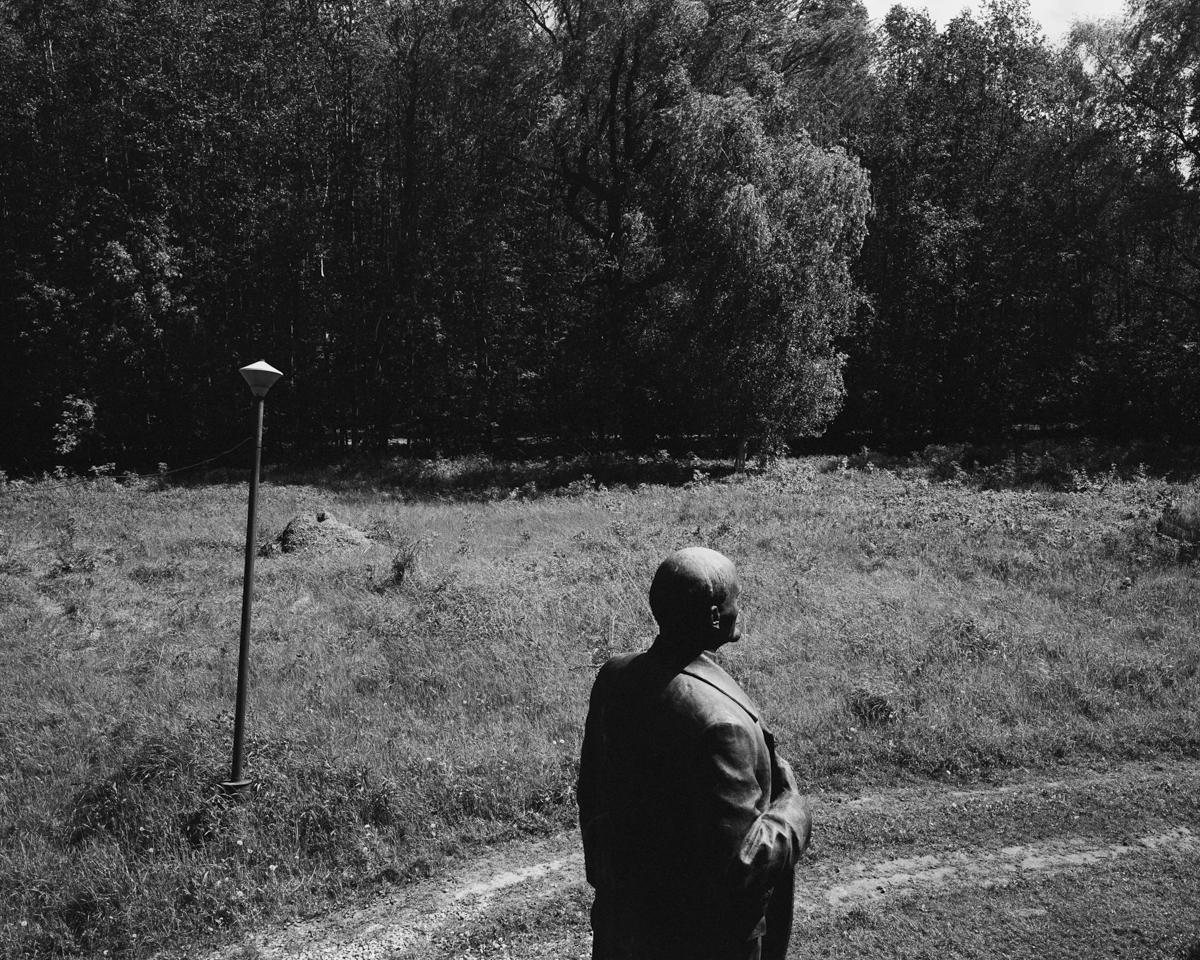
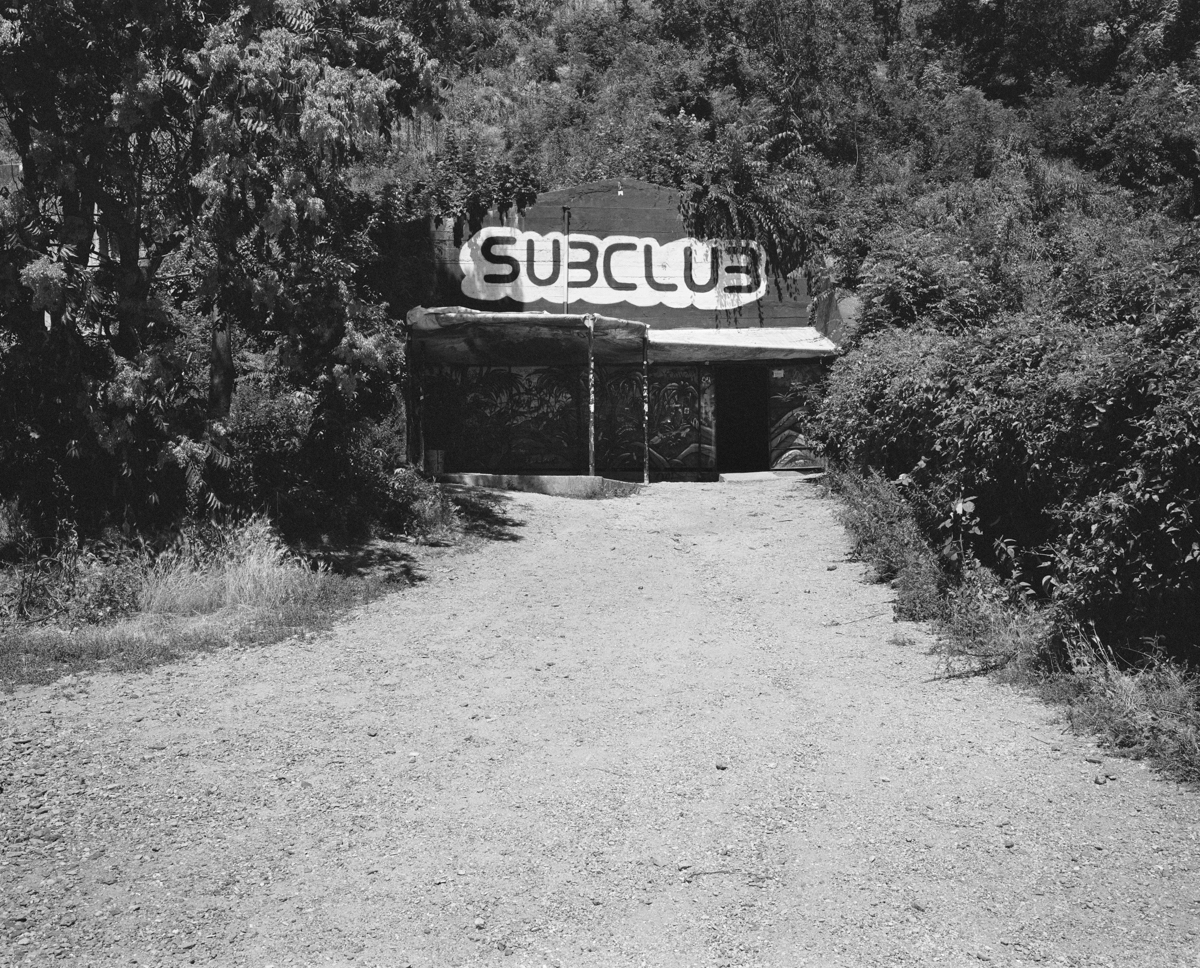
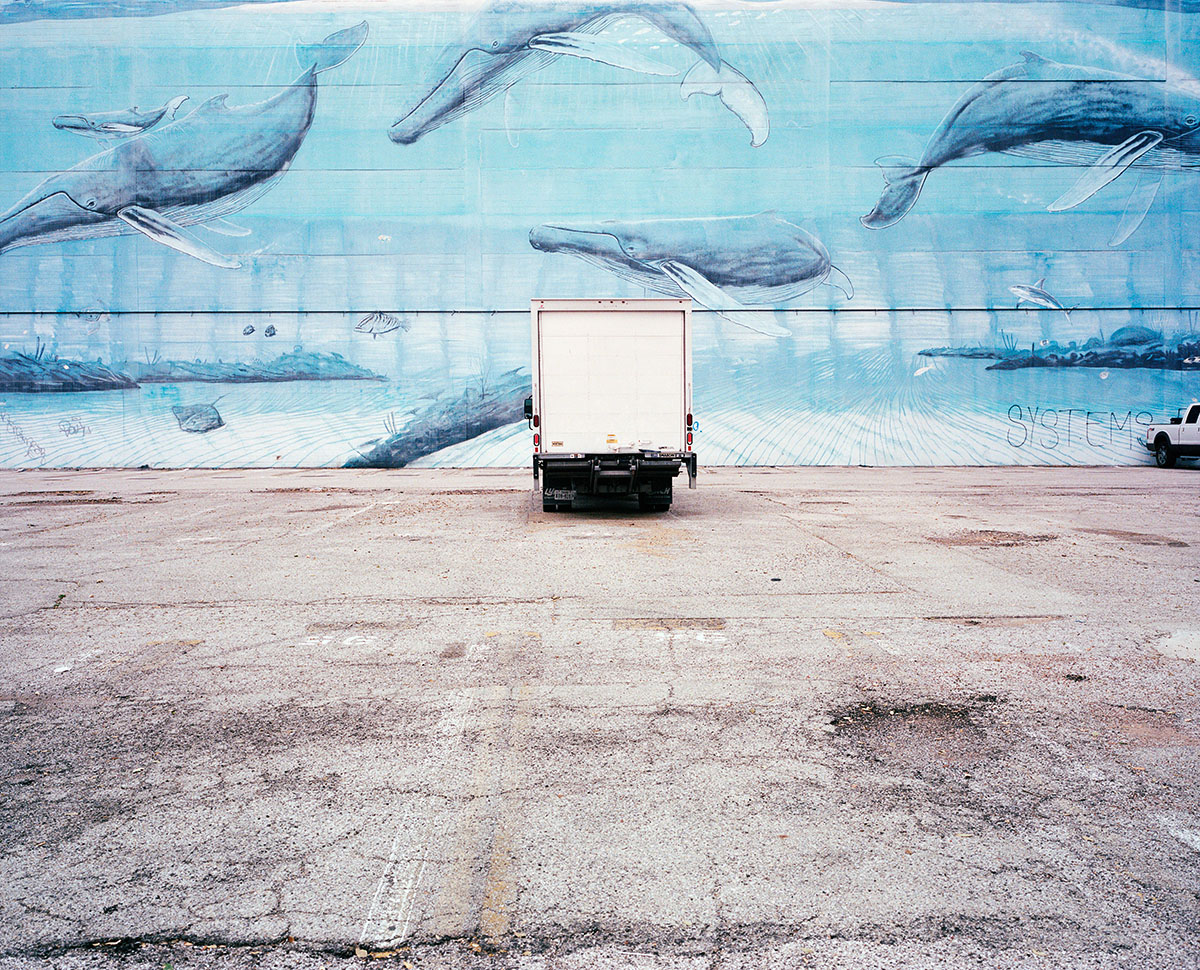
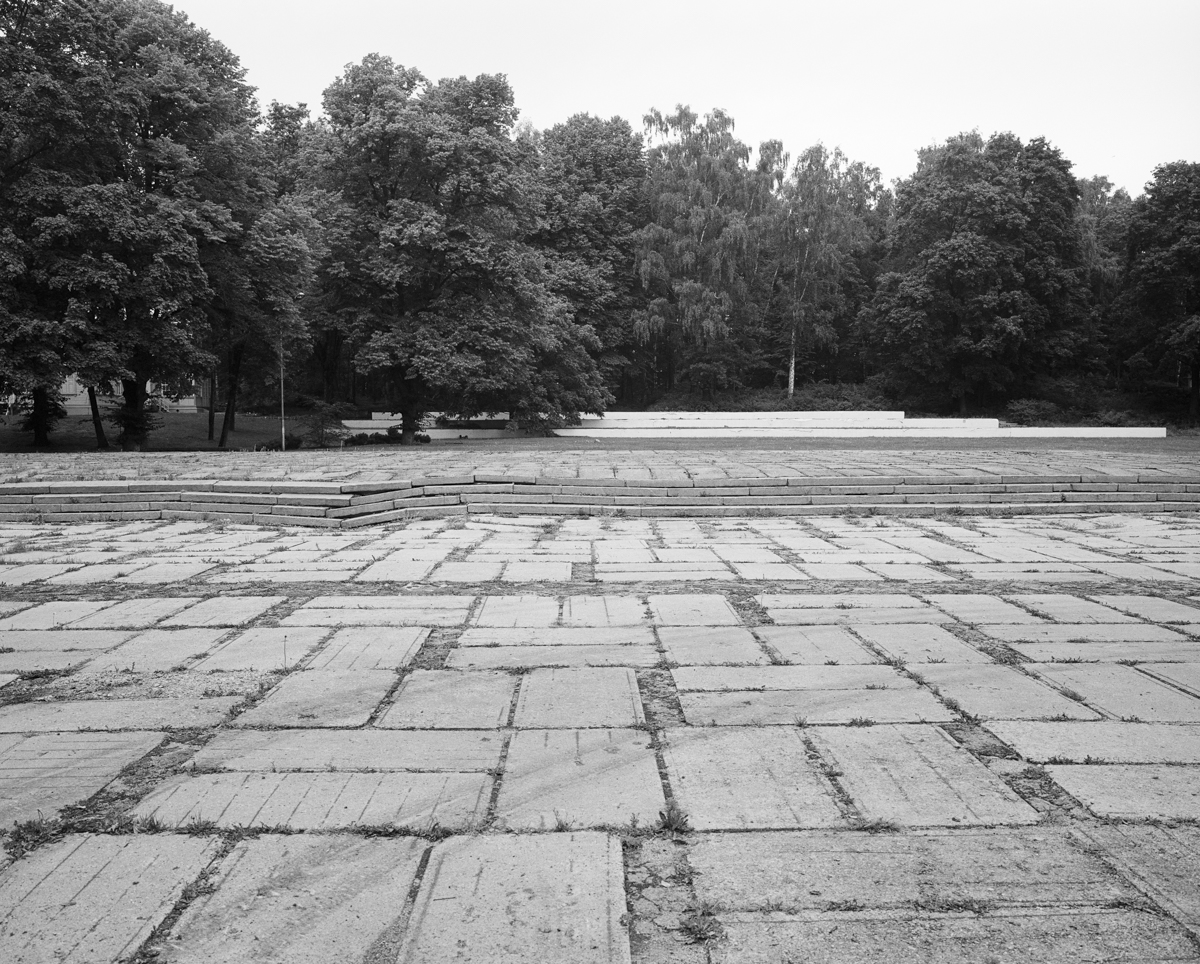
Beginning in the very epicenter of Detroit, Route 12, also known as Michigan Avenue or the Chicago Road, passes through suburbs that are as diverse and segregated as countries on a map before it stretches out into the rural Michigan countryside. Each community the road passes through seems defined by a particular culture that is entirely unique from the one that came before it. Eventually the road turns back into an industrial landscape, passing through Gary, Indiana and then becoming immersed in the high-rises of Chicago and the Magnificent Mile. Although the road moves east to west, the affect one has by traveling on it is more like traveling in a circle that completes itself. These photographs are presented in geographic order, so that viewers can experience the journey as they move from one picture to the next. The images also pay careful attention to the changing land as it evolves from an urban landscape into a rural one and back again. By traveling Michigan Avenue one can truly get a sense of how gradual the change is from one place to the next. This is something that is lost by traveling on super highways or by flying. People bounce from one place to the next and never know what lies in-between. This project is all about exploring the in-between.

Michigan Avenue
Michigan Avenue
Michigan Avenue
Michigan Avenue
Michigan Avenue
Michigan Avenue
Michigan Avenue
Michigan Avenue
Michigan Avenue
Michigan Avenue
Michigan Avenue
Michigan Avenue
Michigan Avenue
Michigan Avenue
Michigan Avenue
Michigan Avenue
Michigan Avenue
Michigan Avenue
Michigan Avenue
Exodus

Exodus

The images in this series were created using motion sensor cameras, placed in the forests in and around Metropolitan Atlanta. It is an area on the frontlines of urban sprawl in America. By using a motion sensor camera, which is traditionally used by hunters, I have allowed the animals in these images to play a role in their creation. Because of the unpredictable and elusive nature of animals there is always an element of surprise built into each image. It is similar to the surprise one feels when actually seeing wildlife, no matter how mundane. In these images, the camera functions as an intruder in the shrinking habitat of suburban wildlife. The flash illuminates the night, revealing the creatures we know are there but rarely see. These photographs allow the viewer to form a relationship with the animals with which we share our own backyards and give an identity to the real victims of urban sprawl.

Exodus
Exodus
Exodus
Exodus
Exodus
Exodus
Exodus
Exodus
Exodus
If Animals Could Talk

Tiger, Prague Zoo
30x40, Duratrans with light box

If Animals Could Talk

If Animals Could Talk is an attempt to point directly at our struggle as humans to connect with non-human animals. In these images people are the ones caught in the artificial environment that zoos and aquariums create to enhance the experience of viewing animals. Animals are often behind well lit panes of glass and we the viewer in darkness to create a movie screen effect. We pause in front of each display just long enough to see, or not see, the animal and then move on to the next simulated experience in much the same way a visitor to a museum looks at artworks on a wall. The images in If Animals Could Talk are printed on transparencies and presented in light boxes to mimic this effect. In these images people are captured in a state of perplexity, looking at animals that no longer seem real. They now are the ones put within a frame to be looked at by the viewer who is now looking at animals, both human and non-human, further blurring the lines of our own “animality”.

If Animals Could Talk

Penguinarium, Detroit Zoo
30x40, Duratrans with light box

If Animals Could Talk

Reptile House, Atlanta Zoo
30x40, Duratrans with light box

If Animals Could Talk

Deep Sea, Tennessee Aquarium
30x40, Duratrans with light box

If Animals Could Talk

If Animals Could Talk
Installation View

If Animals Could Talk

If Animals Could Talk
Installation View

Night Zoo, 2009

(3:00 Clip)

Finch, 2007

Installation View

Hamster on a Wheel, 2007

David Byrne

David Byrne

Ken Kesey

Ken Kesey

Noam Chomsky

Noam Chomsky

Eugene Richards

Eugene Richards

Jane Goodall

Jane Goodall

David Cerny

David Cerny

Allen Ginsberg

Allen Ginsberg

Thich Nhat Hanh

Thich Nhat Hanh

Bob Weir

Bob Weir

Patch Adams

Patch Adams

Georgie
Cotton Candy
Pista
Detroit
Boys Smoking
Drive Inn
Ferry Boat, Portugal
I Love Jesus
Boy in Water, Portugal
Kentucky
Jim, Detroit
Molly
Measuring Baby, Romania
Boy in a Box
Woman Fishing
Shepard, Romania
Hour Detroit, April 2008

Hour Detroit, April 2008

Hour Detroit, April 2008

Hour Detroit, April 2008

XXL Magazine, December 2007

XXL Magazine, December 2007

Hour Detroit, December 2006

Hour Detroit, December 2006

Hour Detroit, December 2006

Hour Detroit, December 2006

Hour Detroit, February 2006

Hour Detroit, February 2006

Hour Detroit, December 2006

Hour Detroit, December 2005

Hour Detroit, July 2005

Hour Detroit, July 2005

Hour Detroit, April 2005

Hour Detroit, April 2005

Hour Detroit, February 2005

Hour Detroit, February 2005

Hour Detroit, September 2004

Hour Detroit, September 2004

Hour Detroit, September 2004

Hour Detroit, September 2004

Hour Detroit, May 2004

Hour Detroit, May 2004

Hour Detroit, May 2004

Hour Detroit, May 2004

Matthew Moore

Matthew Moore received an MFA degree in 2009 from Georgia State University in Atlanta, Georgia where he was awarded the Ernest G. Welch Graduate Photography Award in 2007 and the Chandler Award in 2006. He received a BFA degree in 2000 from the College for Creative Studies in Detroit, Michigan. After completing his BFA Matthew moved to the Czech Republic for two years. Since that time he has returned there frequently to exhibit work and lecture, most recently at Prague College and Univerzita J. E. Purkyne. In 2002 Matthew became a regular contributor to Hour Detroit Magazine and his 2004 documentary, “A Tale of Two Cities,” won a silver medal for Best Photo Essay in a City or Regional Magazine. Other editorial clients include Detroit Home Magazine, XXL and Mass Appeal. In addition to his editorial work, Matthew has also taught photography at several institutions and universities including Henry Ford Community College in Dearborn, Michigan and Georgia State University in Atlanta, Georgia. He currently lives in Baltimore where he is an instructor of photography and coordinator of the photography program at Anne Arundel Community College.

Woman with Flag
Exodus
If Animals Could Talk

Jellyfish, Atlanta Aquarium
30x40, Duratrans with light box

If Animals Could Talk

Indonesian Jungle, Prague Zoo
30x40, Duratrans with light box